What Water Sources Should You Avoid Completely?
Share
One of the most important survival water skills is knowing when not to collect. Many people focus on how to treat water, but expert judgment begins earlier than that. Some water sources are poor candidates for treatment from the start, especially when the risk profile is high and the contamination path is unknown.
Why avoidance is a core survival skill
A portable filter is not meant to turn every ugly source into a good decision. Real field judgment includes recognizing sources that create too much uncertainty, too much contamination load, or too much consequence if your assumptions are wrong.
This matters because many water mistakes begin with convenience. People collect from the closest source, the easiest source, or the only visible source without first asking whether it belongs in the treatable category at all.
Sources that deserve immediate caution
Water that smells chemical, sits beside industrial activity, runs through heavy flood debris, pools near roads, or clearly mixes with sewage-related environments should immediately raise the decision threshold. These are not ordinary backcountry water problems.
Likewise, stagnant warm water with obvious algae growth, heavy animal use, or thick organic decay should be treated as a poor candidate even before you think about which tool you plan to use.
Why uncertainty itself is a warning sign
Many dangerous water decisions come from unknown upstream history. If you do not know whether the source may have crossed urban runoff, damaged sanitation systems, agricultural waste, fuel contamination, or storm debris, you should not assume your normal treatment workflow is enough.
In survival settings, uncertainty is not a minor inconvenience. It is often the main reason to reject a water source and keep moving if a better option exists.
The better decision standard
Ask a stricter question than can I treat this. Ask should I rely on this source at all? That shift protects you from false confidence and from asking your gear to solve a problem it was never built to solve by itself.
The best outdoor water users are not the ones who bravely process every source. They are the ones who know when refusal is the most intelligent move.
Final Takeaway
The strongest water judgment is sometimes refusal. If a source belongs to a high-risk or unknown contamination category, avoidance is often safer than treatment optimism.
Related Reading
Recommended Gear
Main Filter for Better Sources
Once you choose the best available source, the main StayAlive filter helps turn that decision into a usable hydration routine. StayAlive Survival Water Filter.
Replacement Filters for Repeated Use
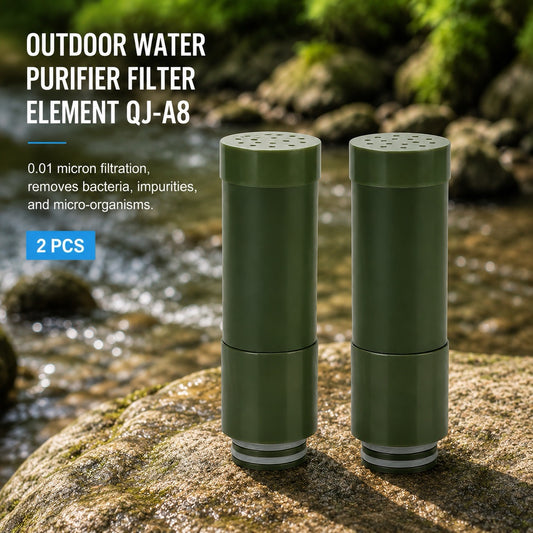
If you rely on filtration often, replacement cartridges keep source decisions from becoming maintenance emergencies later. StayAlive Replacement Filter.