Can a Water Filter Be Used After Freezing?
Share
Freezing is one of the most serious threats to a portable water filter in cold-weather use. Many users underestimate it because the filter may look normal afterward. But a filter does not need obvious external damage to become questionable. In winter, the issue is not appearance. It is whether you still trust the internal integrity of the treatment path.
Why freezing is such a big deal
If water remains inside the filter and freezes, expansion can affect internal components in ways that are not always visible from the outside. That is why cold-weather users treat freezing not as a cosmetic problem but as a system-confidence problem.
The danger is not just that the filter might work poorly. The deeper issue is that uncertainty becomes much harder to judge in the field. You may still get water flow and still not know whether the unit should be trusted.
Why this gets mishandled so often
The most common mistake is assuming the filter is fine because it thawed and still seems to function. That logic is understandable, but it is exactly the kind of guess that experienced cold-weather users try to avoid. Winter gear decisions should reduce uncertainty, not normalize it.
Another mistake is failing to plan for where the filter spends the coldest hours. Overnight exposure, vehicle storage, and pack placement all matter when temperatures drop below freezing.
A more disciplined winter mindset
In cold weather, prevention matters more than recovery. Treat freezing as a threat that should be managed before it happens. Keep the filter in a protected temperature zone whenever possible and do not assume that a frozen-then-thawed unit deserves automatic confidence.
This is why redundancy matters more in winter than in mild conditions. A spare treatment option reduces the pressure to trust something you are no longer sure about.
What the practical lesson is
Cold-weather water treatment is less forgiving than summer use. If you think the filter may have frozen while wet, the key question is not whether you want it to still be fine. The key question is whether you can justify relying on it.
That standard may feel strict, but strict standards are exactly what make winter survival decisions safer.
Final Takeaway
A filter that has potentially frozen should be treated as a confidence problem, not just a convenience problem. In winter, prevention and backup planning matter more than optimistic assumptions.
How to Judge a Suspected Freeze Event
This section captures the more conservative field judgment needed when you suspect a filter may have frozen.
After a possible freeze event, many users ask the wrong question first. They ask how to prove the filter is fine. A more survival-minded question is how much confidence you can justify keeping. Freeze damage is difficult because the filter may still look normal and still move water, yet your trust in its internal condition may no longer deserve the same level as before.
Why this is difficult to judge in the field
Freeze-related damage is not always obvious from the outside. There may be no dramatic crack, no loud failure, and no clear visual warning. That is exactly why winter users should avoid overconfidence.
The field problem is not just mechanical diagnosis. It is decision quality under uncertainty. You often have to act before you can know as much as you would like.
What should raise suspicion
If the filter was stored wet in freezing temperatures, left exposed overnight, forgotten in a vehicle, or handled carelessly during subfreezing travel, suspicion is justified. These are not minor details. They are exactly the situations where confidence should be downgraded.
The mistake is waiting for a dramatic sign before taking the risk seriously. By the time you want certainty, you are usually already in the middle of depending on the gear.
Why flow alone is not enough
A filter that still produces water is not automatically a trustworthy winter filter. Flow can create false reassurance because it is the most visible sign, not the most complete one.
This is why seasoned cold-weather users think in terms of justified trust, not simple function. The filter may still appear operational while your confidence in its treatment path should already be lower.
The safer decision model
If freezing is a realistic possibility, treat the event seriously, favor backup options, and avoid forcing yourself into a yes-only conclusion because you want the gear to still be usable. Preparedness becomes stronger when uncertainty leads to caution instead of bargaining.
A spare filter or alternate treatment option removes pressure and makes smarter winter decisions possible.
Related Reading
Recommended Gear
Replacement Filter Backup
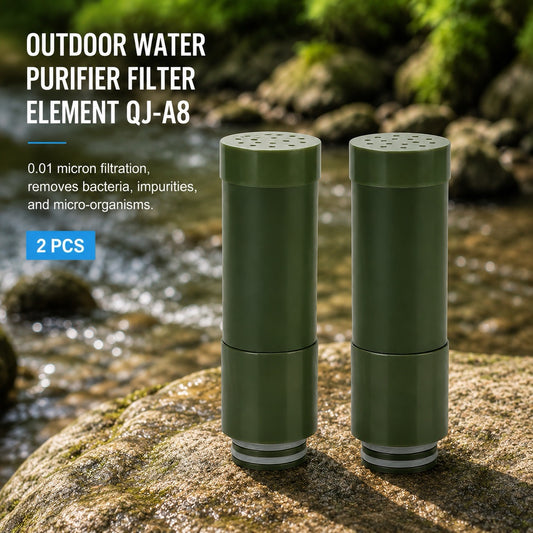
If the article raised maintenance or confidence questions, the smartest next step is keeping replacement filters ready before the current setup becomes doubtful. StayAlive Replacement Filter.
Main Filter System
Use the main StayAlive filter as the primary field tool, then support it with better storage, replacement timing, and clean-side habits. StayAlive Survival Water Filter.