How to Treat Water After Flooding or Storm Damage
Share
Water after flooding or major storm damage should be treated as a completely different category from routine hiking or camping sources. The problem is not only dirt. Floodwater can involve sewage, chemicals, fuel, industrial runoff, decomposing material, and infrastructure damage all at once. That changes both the risk level and the decision standard.
Why floodwater is not normal outdoor water
In ordinary backcountry situations, the main issue is usually natural-source contamination. After flooding, the water may have passed through roads, buildings, drains, damaged sanitation systems, agricultural zones, and unknown debris fields. This is why stormwater should never be treated like a slightly dirtier stream.
The mistake many people make is thinking the problem is only sediment. In reality, the visible brown color is often the least important part of the risk picture.
Why judgment should become more conservative
Post-storm conditions require a stricter standard because the source is no longer simple. Even if you have filtration gear, you should first ask whether the source is appropriate to treat at all. Sometimes the most expert decision is not how to process the water. It is how to avoid that source and prioritize stored or better-protected supply instead.
That is especially true when you do not know what the water contacted upstream. Unknown urban contamination should push your thinking toward caution, not improvisation.
What a better emergency plan looks like
Strong storm preparedness depends on layered planning before the disaster, not heroic water decisions after it. Stored water, protected backup treatment tools, and a realistic household routine reduce the odds that you end up relying on contaminated floodwater in the first place.
If you are forced into difficult conditions, source selection and avoidance become more important, not less. The dirtier and more uncertain the environment becomes, the less you should rely on simplistic assumptions about what a portable filter can solve alone.
The survival lesson
Storm-damage water is a risk-management problem before it is a gear problem. A filter can still be part of preparedness, but the bigger skill is recognizing when the water source itself belongs in a different threat category.
This mindset protects you from the most dangerous false comfort of all: believing that because you own a filter, every emergency water source has become manageable.
Final Takeaway
After flooding or storm damage, safer water decisions start with caution and source avoidance. Treat stormwater as a higher-risk category, not as normal outdoor water with extra mud.
Handling Bad but Unavoidable Water
Not every degraded water source is pure floodwater, but many emergency users still end up dealing with silty or brown water under pressure. The practical lessons belong here.
Sometimes the water problem is not choosing the best source. It is dealing with a bad source because there is no clearly better one. Silty or brown water forces a different kind of discipline. The goal is not to pretend the source is good. The goal is to reduce harm, protect the filter, and improve your decision quality under constraint.
Accept that you are in a degraded scenario
The first mental shift is admitting that the source is poor. That sounds obvious, but it matters because it changes how carefully you approach every later step. You are no longer using a preferred water point. You are managing a compromise.
This mindset helps you slow down and protect your equipment instead of treating the source like a normal refill stop.
Improve the source before full treatment
With heavily silty water, the best move is often to reduce the visible load first. Let the water settle if possible, use rough pre-filtration, and avoid the dirtiest intake point if you have any choice at all.
This is not a luxury step. It is part of survival workflow. Bad water handled thoughtfully becomes more manageable than bad water attacked impatiently.
Protect the filter from being forced to do everything
A portable filter should not be treated like a machine that makes source quality irrelevant. The worse the water becomes, the more your workflow matters. That includes how much sediment you remove first and how carefully you manage the dirty side of the process.
This is one of the strongest field lessons in water survival: source preparation and gear preservation are tightly connected.
Know the limits of a bad-water plan
If your only available source is poor, you may still need to use it. But you should do so with a stricter sense of limitation and more conservative expectations. Brown water is not automatically untreatable, but it should make you more cautious, not more casual.
The expert move is not pretending the situation is fine. It is making the best controlled decision inside an already degraded scenario.
Related Reading
- How to Build a 72-Hour Family Water Plan
- How to Build a Vehicle Water Backup Kit
- Best Water Sources for a Bug Out Scenario
Recommended Gear
Main Filter for Active Use
For bug out, travel, camping, and vehicle readiness, the main StayAlive filter gives you faster repeat access to safer drinking water. StayAlive Survival Water Filter.
Replacement Filters for Continuity
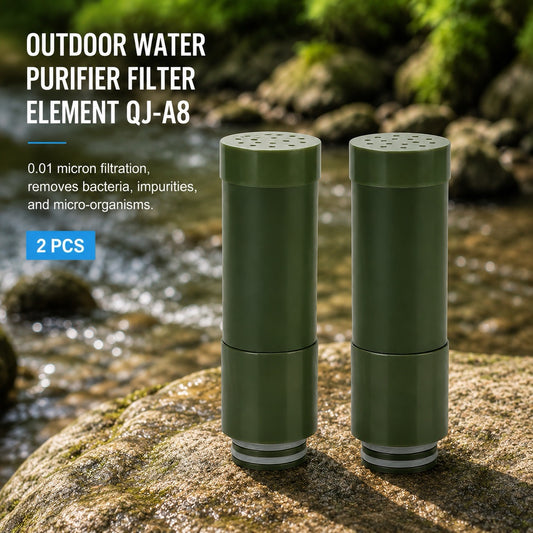
If your scenario involves family use, multi-day disruption, or long-term storage, spare filters give the plan staying power. StayAlive Replacement Filter.