How to Build a 72-Hour Family Water Plan
Share
A 72-hour family water plan is one of the clearest ways to turn vague preparedness into something real. Three days is long enough to expose weak assumptions and short enough that most households can build a credible system without becoming extreme. The point is not just to store water. It is to create a plan your household can actually execute under stress.
Think in layers, not one number
A strong 72-hour plan starts with stored water, but it should not end there. Families need a primary supply, a backup way to make more water usable, and a simple routine for how water will be managed if utilities stay unreliable.
When you think only in gallons or bottles, you miss the operational side of the problem. Who handles collection if needed? What happens if one location supply is inaccessible? How does the family avoid burning through the cleanest water too fast?
Household scale changes everything
A one-person emergency plan is very different from a family plan. More people means more drinking demand, more decision stress, and more opportunities for confusion. That is why multi-person households often benefit from more than one treatment unit and more than one storage point.
Redundancy is not overkill when several people depend on the same system. It is what prevents a minor failure from becoming a full breakdown in the plan.
Make the plan easy to run
Preparedness improves when the system is physically organized. Stored water should be accessible, treatment gear should be easy to find, and replacement filters should live where they will actually be reached when needed. A good emergency plan is one that still works when nobody feels calm.
This is also why family plans need simple role logic. If only one person understands the gear, the system is weaker than it looks on paper.
Why 72 hours is a useful benchmark
Three days is long enough to reveal whether your household has true resilience or only symbolic preparedness. It forces you to think about continuity, not just initial stockpiling.
Once a 72-hour water plan is real, expanding it becomes much easier. But without that first benchmark, most families never move beyond scattered supplies and wishful assumptions.
Final Takeaway
A 72-hour family water plan should combine stored supply, backup treatment, redundancy, and a simple household routine. Preparedness becomes real when your family can actually run the system, not just admire it.
How Much Water a Family Kit Really Needs
This section adds the household-scale planning perspective that was previously covered in a separate article.
Many households ask the right question in the wrong way. They ask how much water a family emergency kit needs as if there is one universal number that solves the whole problem. Real preparedness is more dynamic. It depends on family size, climate, disruption length, and whether your plan includes only stored water or also a way to make more water usable.
Why generic numbers are only a starting point
Simple emergency water rules are useful because they force people to think at all. But they become misleading if families treat them as complete answers. A realistic plan should account for drinking needs, hot weather, children, stress, cooking, and the possibility that a disruption lasts longer than expected.
In other words, fixed numbers can launch planning, but they should not be the end of planning.
Think in stored water plus water continuity
A resilient family kit combines immediate stored supply with a way to extend capability if conditions drag on. Households that only store water are better prepared than households that do nothing, but they still rely entirely on their first estimate being right.
A better emergency kit treats storage as the opening layer and treatment capacity as the continuity layer. That makes the system more forgiving if the timeline expands.
Why family size changes the system design
More people do not just multiply water demand. They multiply operational complexity. More people means more handling, more containers, more decision points, and more pressure if the plan was built too narrowly.
That is why families often benefit from more redundancy than solo users do. The question is not only how much water to have. It is how robust the whole system remains when several people depend on it at once.
Build for stress, not ideal behavior
Emergency kits should assume imperfect decision-making. People may ration poorly, use extra water, forget where things are stored, or rely on the wrong container first. A strong system anticipates normal human behavior instead of expecting calm precision.
This is exactly why clear organization and backup treatment tools matter. They make the plan more survivable even when execution is not elegant.
Related Reading
Recommended Gear
Main Filter for Active Use
For bug out, travel, camping, and vehicle readiness, the main StayAlive filter gives you faster repeat access to safer drinking water. StayAlive Survival Water Filter.
Replacement Filters for Continuity
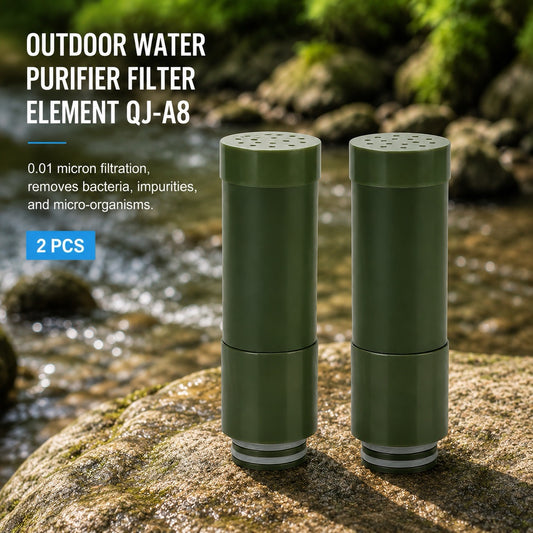
If your scenario involves family use, multi-day disruption, or long-term storage, spare filters give the plan staying power. StayAlive Replacement Filter.