Can a Portable Water Filter Remove Viruses?
Share
Viruses are one of the most misunderstood topics in outdoor water treatment. Many buyers hear that a filter makes water safer and assume that means all biological threats are handled the same way. In reality, viruses are a distinct planning issue, and the answer depends heavily on where the water comes from and what kind of contamination you are worried about.
Why viruses are different from common backcountry risks
In many hiking and camping situations, the main biological risks are more often bacteria and protozoa from natural freshwater contamination. That is why portable filters are so useful in backcountry travel. They are designed around the kinds of risks that show up most often in streams, springs, and lakes used by outdoor travelers.
Viruses become a more serious planning concern when water is affected by human sewage, dense urban runoff, major flooding, or disaster-related sanitation failure. That is a different category of risk from a normal mountain stream or a clear lake used on a weekend trip.
Why users get confused
The confusion usually comes from broad marketing language. People hear words like pure, safe, filtered, or survival-ready and assume every waterborne threat has been addressed equally. But water treatment is not one problem. It is a group of problems that change depending on the source.
A portable filter can still be the right tool for most real outdoor scenarios while not being the complete answer for every virus-related situation. Those two facts can both be true at the same time.
When to be especially cautious
If water may be affected by flood damage, sewage overflow, dense human settlement, or unknown urban contamination, you should think beyond a simple backcountry filtration mindset. Those are the moments when layered treatment or source avoidance becomes much more important.
In other words, the question is not only what your filter can do. The bigger question is whether the source belongs to the normal outdoor category at all. Sometimes the most expert move is not treating the water with more confidence. It is choosing a different water source entirely.
The practical takeaway
For most routine hiking, camping, and preparedness use involving natural freshwater, portable filtration is still one of the strongest core tools you can carry. But if your water concern moves into disaster, sewage, or urban contamination territory, your decision-making has to move up a level too.
The strongest survival mindset is not assuming your filter covers every threat. It is understanding which class of problem you are dealing with before you trust the water.
Final Takeaway
Portable filters are excellent for common outdoor freshwater risks, but viruses belong to a higher-risk decision category. Match the tool to the real source, not to the word safe in the abstract.
Related Reading
- What a Portable Water Filter Can and Cannot Remove
- When to Boil Water Even If You Already Have a Filter
Recommended Gear
StayAlive Main Filter
For normal outdoor freshwater use, the main filter is the most practical core tool in the treatment system. StayAlive Survival Water Filter.
Spare Filter Strategy
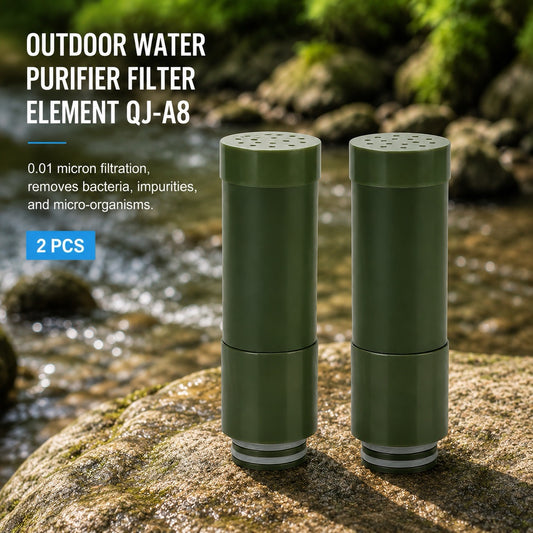
If your treatment plan depends on repeated use, spare filters make the system much more resilient over time. StayAlive Replacement Filter.