What a Portable Water Filter Can and Cannot Remove
Share
Portable water filters are extremely useful, but they are often misunderstood. Some buyers expect a filter to solve every water problem, while others underestimate how effective a good field filter can be for the right source. The safest approach is to understand both its strengths and its limits.
What portable filters are generally good at
A portable outdoor filter is typically most useful for reducing sediment and handling many of the biological risks found in common backcountry water sources. That makes it practical for streams, springs, lakes, and collected water where the main concern is making naturally sourced freshwater safer to drink.
It also gives you something equally important in real use: speed. Fast access to treated water is often the difference between staying hydrated properly and putting off drinking until you are already depleted.
Where people overestimate filtration
A filter is not a blank check for every water source. If water may be affected by industrial runoff, chemical spill, heavy urban flooding, seawater, or unknown contamination, a portable outdoor filter may not be the right tool by itself.
This is where many users go wrong. They assume that because a filter helps in outdoor travel, it will also solve any emergency source. In reality, the type of contamination matters just as much as the equipment.
Why source selection still matters
Even with a quality filter, it is smarter to start with the best source you can find. Clearer flowing freshwater from a cleaner area is easier on the filter and a better candidate for treatment than murky water near roads, livestock, or flood debris.
Good treatment begins before you pump the first drop. Choosing a better source lowers risk, improves filter performance, and makes the whole system more dependable.
How to use a filter more responsibly
Think of a filter as a field-ready solution for common outdoor and emergency freshwater problems, not as a universal water laboratory. Use it where it makes sense, maintain it well, and keep a backup method for unusual conditions.
That mindset creates better decisions than both extremes: blindly trusting every water source or dismissing filtration because it is not all-powerful. Portable filtration is strongest when used realistically and consistently.
Final Takeaway
A portable filter is one of the most useful tools for outdoor water safety, but its job is to treat the right kind of water source. Understanding that boundary is what turns gear into sound judgment.
Chemical and Heavy-Metal Limits
This section adds the stricter source-judgment guidance that applies when chemical contamination becomes plausible.
Chemical contamination and heavy metals are where many people overestimate what a portable survival filter is supposed to do. This confusion is understandable because users often group all dirty water problems together. In reality, chemical risk belongs to a different decision layer than routine natural freshwater treatment.
Why chemicals are a separate planning category
Most routine outdoor water planning is built around natural-source biological contamination. That is why filtration is so useful in normal hiking, camping, and general preparedness scenarios. Chemical contamination changes the problem because it often comes from industry, urban runoff, fuel, floodwater, infrastructure damage, or agricultural exposure.
Those conditions create a different kind of uncertainty than a mountain stream with wildlife activity. They should not be treated as just another version of ordinary backcountry water.
Why users ask the wrong question
People often ask whether the filter removes chemicals as if the answer should be a clean yes or no. The better question is whether the source belongs in a category where chemical contamination is plausible enough that normal field filtration should no longer be your main comfort point.
That change in framing matters because it moves the conversation from product marketing to source judgment, which is where real survival decisions should begin.
Where chemical risk becomes more realistic
Water near industrial zones, major road runoff, storage yards, storm-damaged neighborhoods, heavy agriculture, or obvious fuel exposure should be treated far more cautiously than ordinary forest, stream, or spring sources. Even if the water looks usable, the contamination type may not be visible.
That is exactly why clear-looking water can still be a terrible choice. Visual cleanliness does very little to reassure you about chemical uncertainty.
What the expert takeaway is
Portable survival filtration is strongest in the environment it was truly meant for: uncertain but typical natural freshwater use. Once the water source starts looking like a chemical-risk problem, source avoidance and layered emergency planning become more important than confidence in one tool.
This does not reduce the value of a filter. It clarifies its role. And clear roles are what make emergency systems dependable.
Related Reading
Recommended Gear
StayAlive Main Filter
For normal outdoor freshwater use, the main filter is the most practical core tool in the treatment system. StayAlive Survival Water Filter.
Spare Filter Strategy
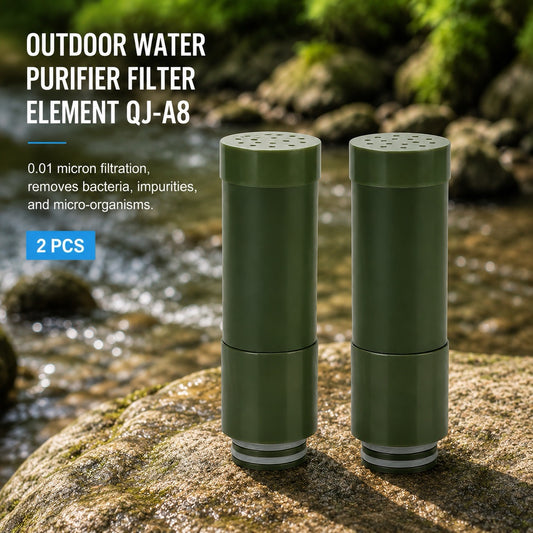
If your treatment plan depends on repeated use, spare filters make the system much more resilient over time. StayAlive Replacement Filter.